Machaerium falciforme
Rudd
(Fabaceae)
|
Machaerium falciforme Rudd (Fabaceae) | |
Espinoza, R. Perez, D. Masís, A. Guadamuz, A. and Chavarría, F. 1998. Machaerium falciforme (Fabaceae) Species Page, September 16, 1998. Species Home Pages, Area de Conservación Guanacaste, Costa Rica. http://www.acguanacaste.ac.cr
I. Identification:
Herbaceous vine.
Flower:
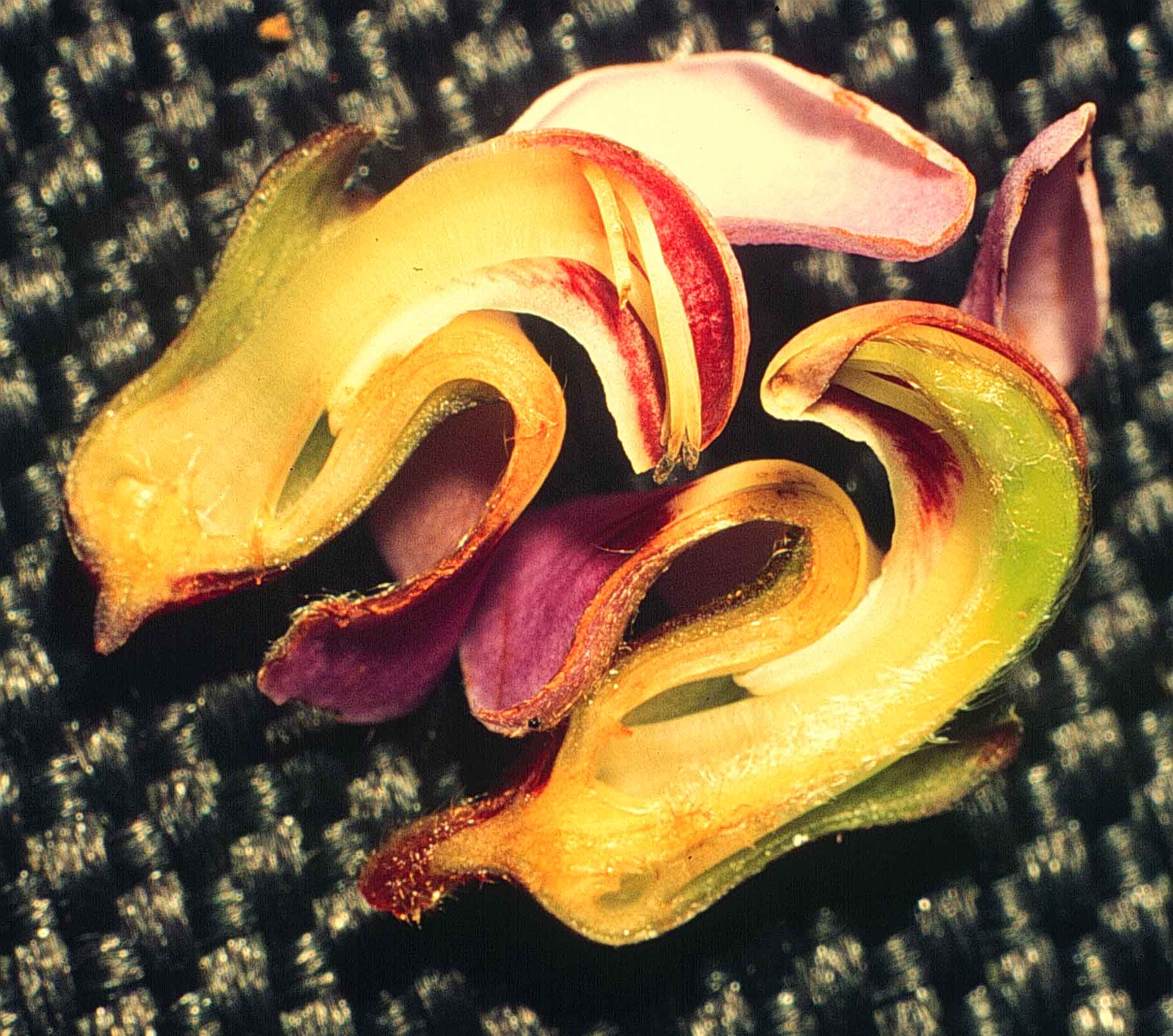
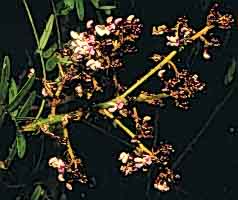
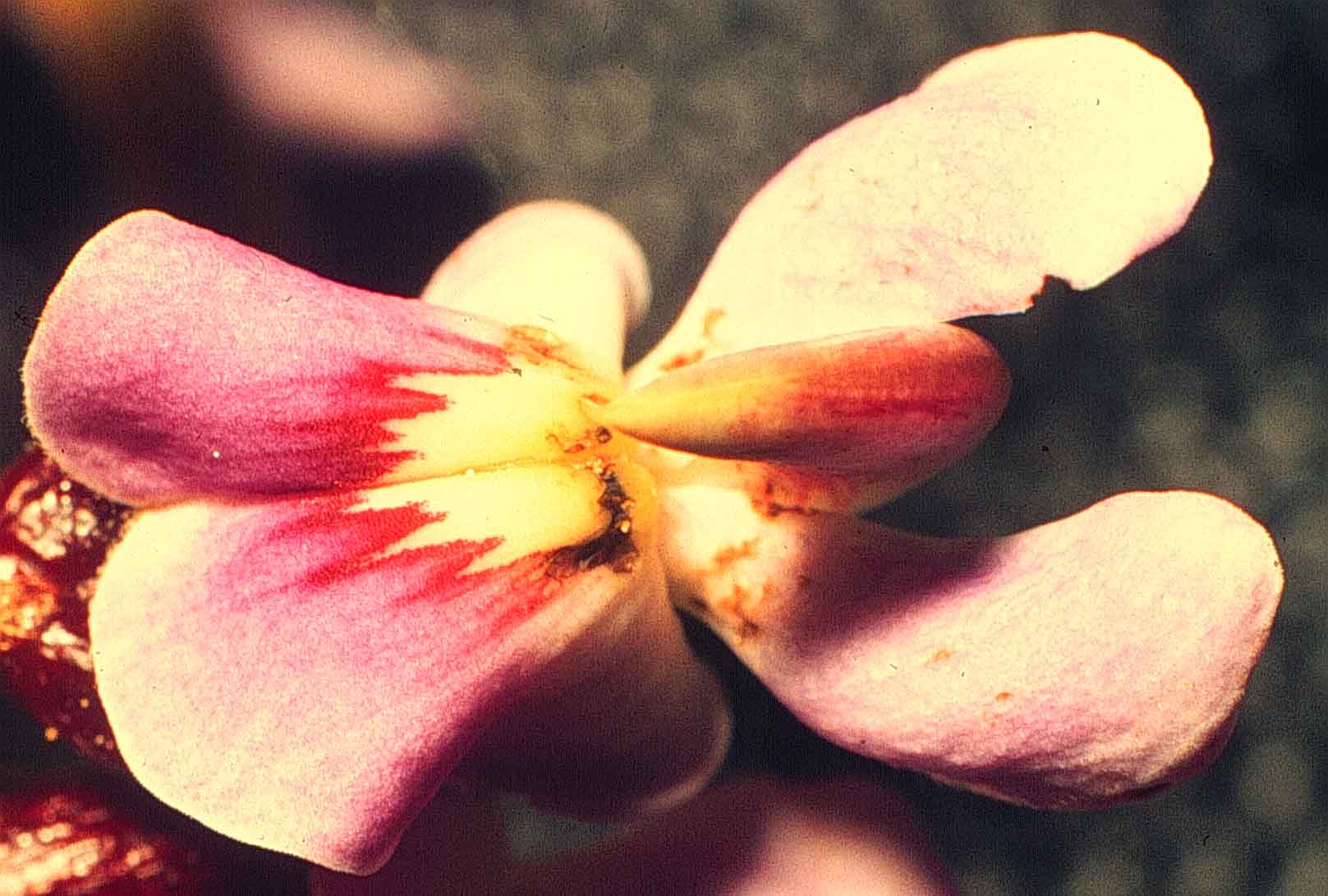
The general color of the flower is purple, calyx dark purple, stamens and pistil green.
|
|
 |
|
Fruit:
Light green color, in the form of samaras approximately 5-8 cm long, 1.5 cm in diameter. Seeds light green, 1.2 mm in length, with 1 seed per fruit.
 |
 |
|
|
|
|
| |
Leaves:
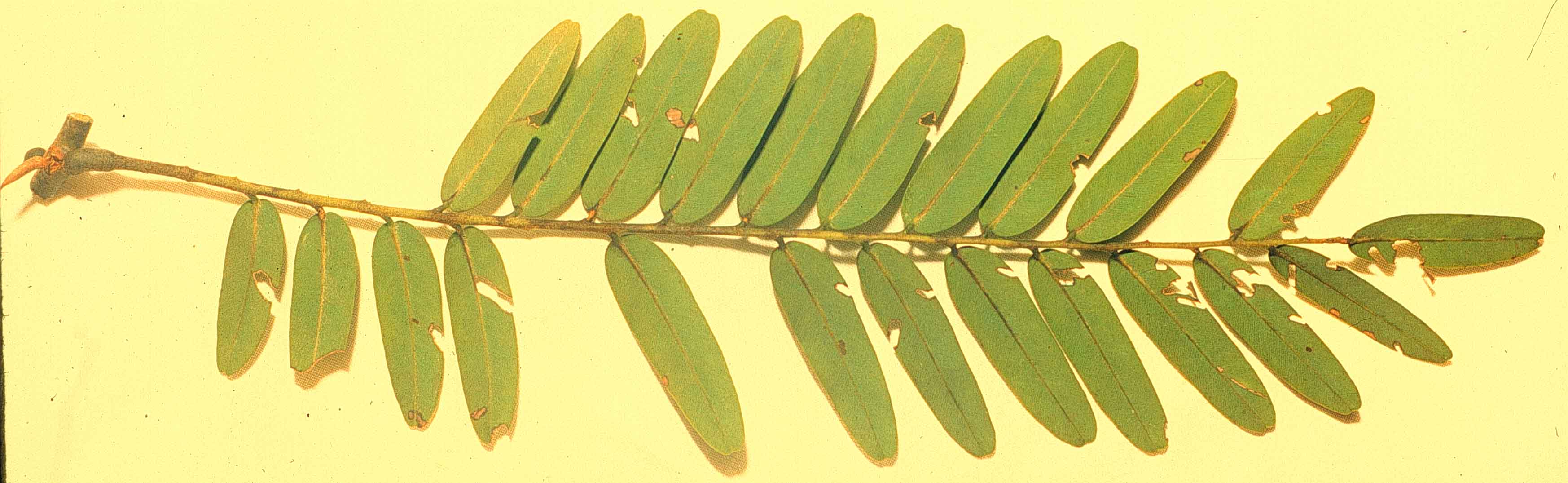
Compound alternate, oval shape, approximately 17-24 cm long, 23-25 principal leaflets, with a cilindrical petiole 1-3 cm long. Leaflets 3-6 cm long, with petiolules 0.1-0.2 cm long.
Leaf arrangement |
Petiole |
Upper surface |
Leaf shoots |
Under surface | |
Bark and wood:
There are thorns on the whole length of the stems and branches, reddish colored wood.
View of two cross-sections | |
Latex |
Thorns |
Bark | |
Whole plant architecture:
|
 |
Similar species:
Verification:
II. Geographic distribution:
International:
In Costa Rica
In the Area de Conservación Guanacaste:
Map of macro-habitats of the
ACG |
III. Natural History:
IV. How to find:
One individual can be found on the hill on the road to Naranjo, where El Cañon del Tigre is located. It is quite possible that the seed was carried down by a tractor that came from a sector such as Los Almendros, where many individuals are found. Its leaflets are distinctive for their elongate form and parallel position to each other. Machaerium is not considered a part of the dry forest. It is dispersed by wind and does not have any bruchid beetles living on it. Up until now the seeds have not been analyzed.
Acknowledgments:
This project was carried out by the Area de Conservación Guanacaste/CR, with help from INBio/CR, ICBG from the Foggarty center, NIH/USA and NSF/USA.
Thanks to Kate Beattie and Alexandra Kern for helping with the managment of images and translation of this species page.
Literature cited: